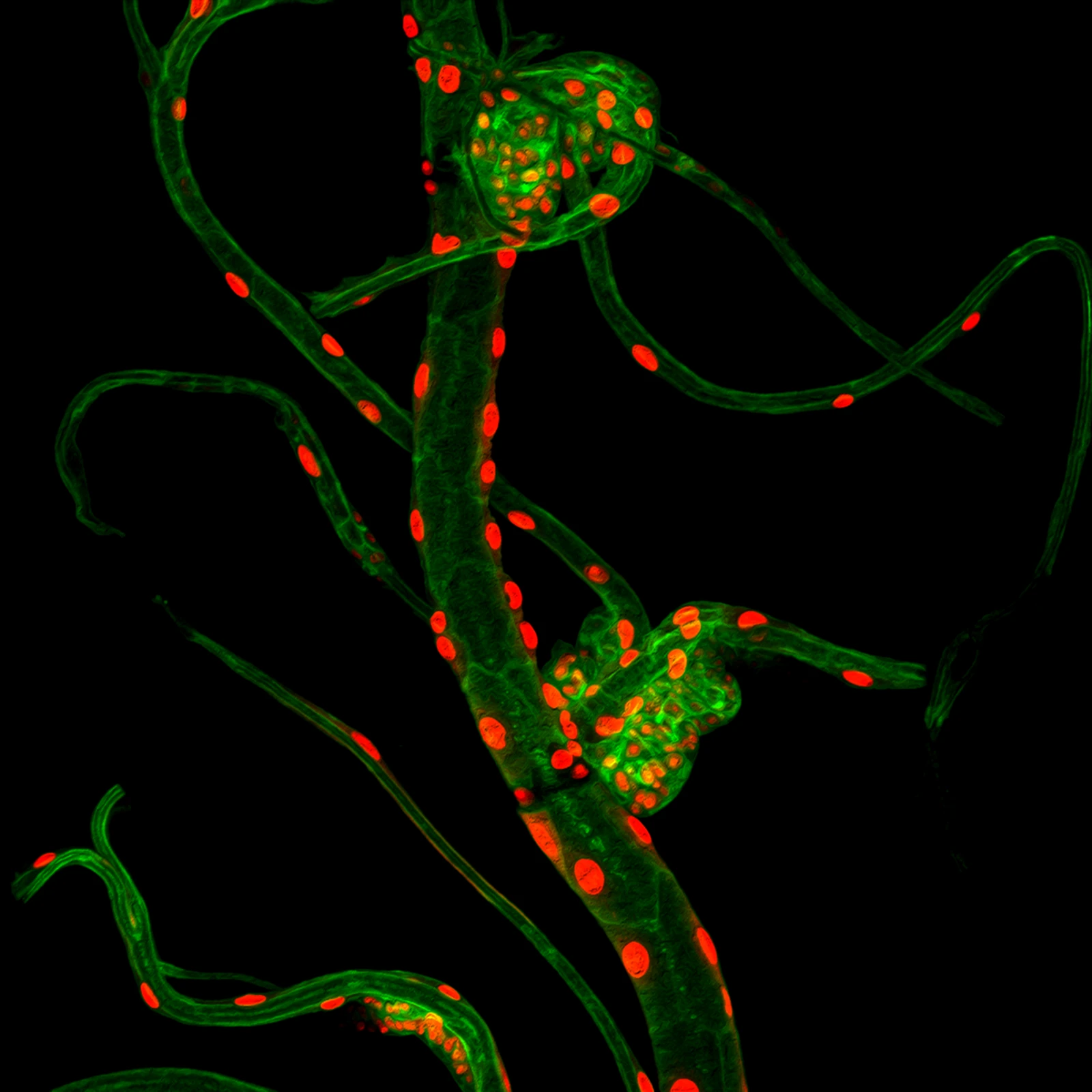
How do differentiated cells adapt to a common developmental signal?
Developmental transitions expose many cell populations to the same systemic endocrine environment. Their responses, however, are not uniform: cells may maintain their function, alter their activity, contribute to tissue remodelling or be eliminated.
My research asks how rapid regulatory mechanisms operating after transcription allow differentiated cells to adjust their behaviour without necessarily changing their identity. I use the larval-to-adult transition as an experimentally tractable system in which hormonal signalling, stress responses, post-transcriptional control, genome amplification and cell elimination can be examined within a shared physiological context.
Development provides a controlled setting for identifying general principles. The same mechanisms that coordinate cellular adaptation during normal development may, when disrupted or no longer properly integrated, produce persistent or inappropriate changes in cellular function and contribute to disease.
Central questionHow do post-transcriptional regulation, RNA–protein organisation and cellular physiology determine whether a differentiated cell can adapt to a developmental transition?